Animated by faith and a desire to serve, faithful Catholics humbly watch over this page to share, in truth and in prayer, the news and messages related to the Holy Father, Pope Leo XIV.
How the 2025 Papal Conclave Unfolded
The 2025 conclave opened on with 133 cardinal electors gathering beneath Michelangelo’s frescoes in the Sistine Chapel. After an inconclusive first day that produced black smoke — signifying no decision — on 7 May, anticipation surged in St Peter’s Square.
On the afternoon of 8 May the fourth ballot succeeded: at white smoke billowed from the chapel chimney and the bells of St Peter’s rang. Crowds erupted in prayer and song as the Swiss Guard and Italian Carabinieri formed an honour corridor.
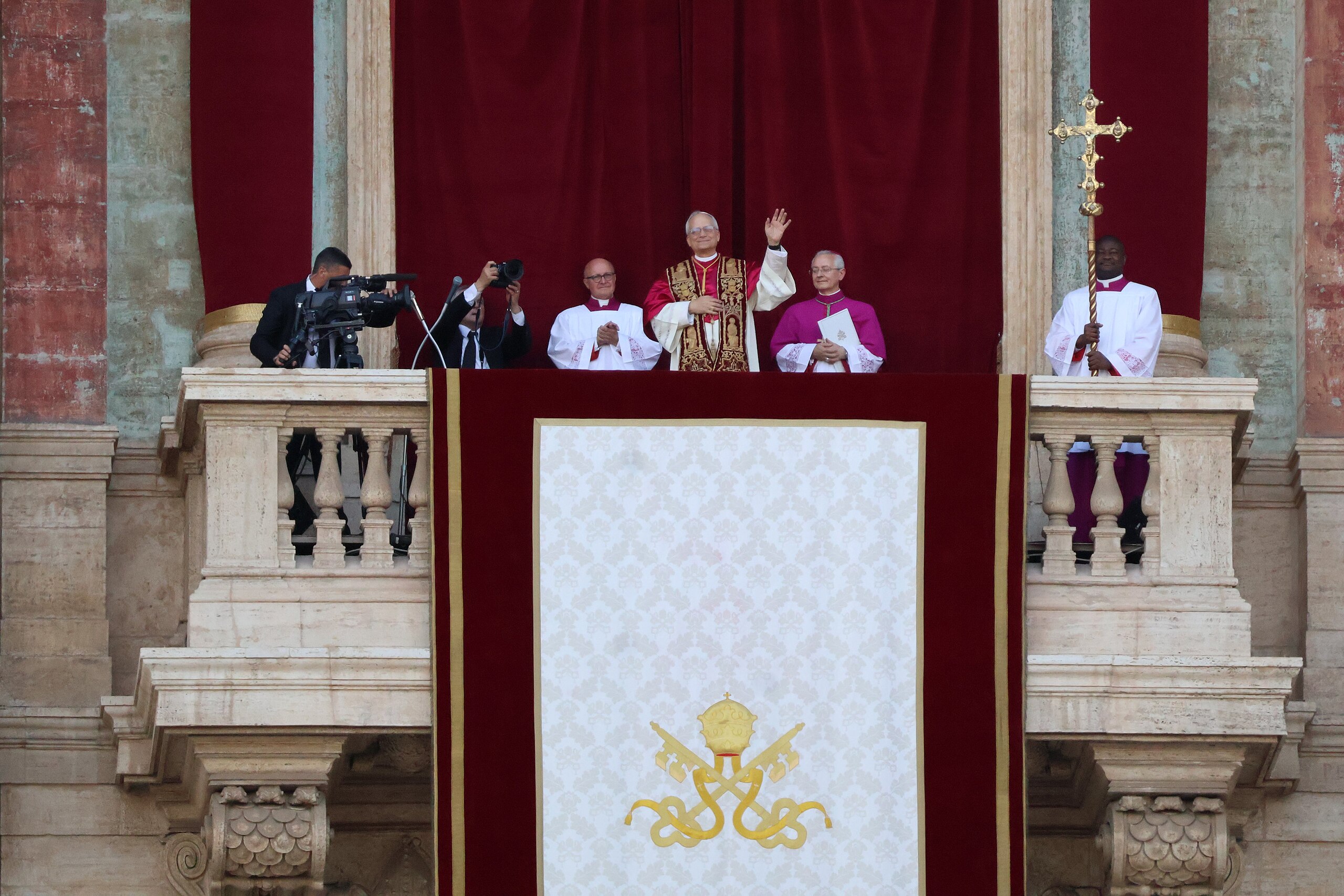
Cardinal Dominique Mamberti, protodeacon of the College of Cardinals, stepped onto the balcony to proclaim the Latin formula Habemus Papam, announcing Chicago‑born Robert Francis Prevost as Pope Leo XIV. Moments later, Leo XIV offered his first apostolic blessing and greeted the faithful in six languages.
Leo XIV is the first pope from the United States and the first to choose the name “Leo” in 120 years, underscoring continuity with Leo XIII and his legacy of social teaching.
Church historians noted the relatively swift election — four rounds over two days — highlighting Prevost’s extensive pastoral experience and his reputation as a bridge‑builder across continents.
World leaders and Christian patriarchs quickly welcomed the new pontiff, calling his election a moment of hope amid global challenges.
A Brief Biography
Born: 14 September 1955, Chicago, USA
Family: French-Italian father & Spanish-American mother; two brothers
Education: B.Sc. Mathematics, Villanova University (1977); M.Div. CTU Chicago; Doctorate in Canon Law (Angelicum, Rome 1985)
Religious Order: Order of Saint Augustine – solemn vows 1981, ordained priest 1982
Missionary Service: Nearly 20 years in Peru across Chulucanas & Trujillo (1985-1998)
Prior General: Led the worldwide Augustinians for two terms (2001-2013)
Episcopal Ministry: Bishop of Chiclayo (2015-2023); Prefect, Dicastery for Bishops (2023-2025)
Created Cardinal: 30 September 2023 by Pope Francis
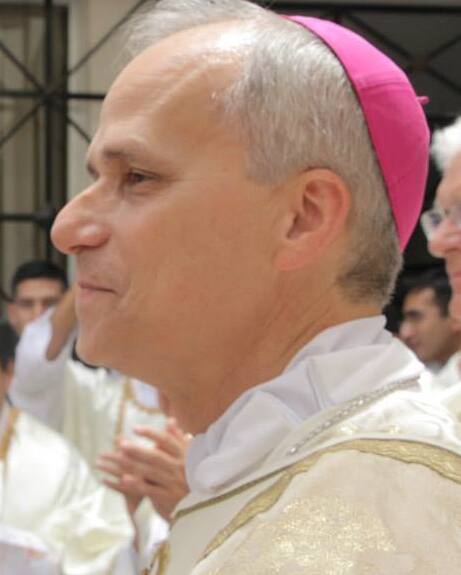
Robert Francis Prevost at the Chrism Mass in the Cathedral of Chiclayo, 2014 — licensed CC BY-SA 4.0
Pope Leo XIV—born Robert Francis Prevost—spent decades championing pastoral closeness, social justice and synodal listening. Fluent in English, Spanish, Italian, French, Portuguese and Latin, he bridges cultures and continents in his ministry.
Early Life & Missionary Journey
Growing up in Chicago (1955‑1977) – Raised in a bilingual household at St Mary of the Assumption parish, young Robert excelled in mathematics and altar‑served daily Mass. At Villanova University he discovered the writings of St Augustine, prompting him to join the Order’s novitiate immediately after graduation.
Formation & Doctoral Studies (1977‑1985) – Amid graduate theology in Chicago, he earned a Doctorate in Canon Law in Rome, focusing on communal leadership in Augustinian life. His thesis later guided reforms on collegial governance within the Order.
Mission in Peru (1985‑1998) – Sent to the drought‑stricken prelature of Chulucanas, Fr Prevost repaired rural chapels on horseback, learned Quechua phrases for catechesis, and set up clean‑water initiatives. In Trujillo he founded an Augustinian formation program and taught canon law, simultaneously serving as diocesan judicial vicar and parish pastor.
Leadership of the Augustinians (1999‑2013) – Elected provincial in Chicago and, two years later, the worldwide Prior General, he visited 50 countries promoting “community over efficiency,” launched the Augustine Centre for Justice & Peace, and oversaw new missions in Kenya and Vietnam.
Bishop of Chiclayo (2014‑2023) – Pope Francis tapped him as apostolic administrator, then bishop, in northern Peru. He created the diocesan Child‑Protection Commission, expanded Caritas soup‑kitchens during El Niño floods, and restored the 18th‑century Cathedral of St Mary.
Service to the Universal Church (2023‑2025) – As Prefect of the Dicastery for Bishops he revamped selection processes to include more lay consultation and women in vetting panels, echoing his conviction that “a bishop is a pastor, not a manager.” His elevation to cardinal and now successor of Peter crowns a life of missionary discipleship.
8 May 2025 – Day of Election
18:07 CEST
White smoke rises above the Sistine Chapel, signalling a successful vote.
19:12 CEST
Cardinal Protodeacon proclaims “Habemus papam!” to the cheering crowd.
19:20 CEST
Pope Leo XIV appears on the balcony of St Peter’s, offering his first blessing and greeting of peace.
Who Is Pope Leo XIV? — A Portrait of the First American Pope
Global Roots & Languages
Born Robert Francis Prevost on in Chicago, Pope Leo XIV
carries French-Italian ancestry from his father and Spanish heritage from his mother, giving him an instinctive bridge
between continents :contentReference[oaicite:0]{index=0}. Fluent in English, Spanish, Italian and French, he also reads Latin
and German
Missionary Heart in Peru
After earning degrees in mathematics, philosophy and a doctorate in canon law, the young Augustinian friar chose
to serve in the drought-stricken prelature of Chulucanas and later in Chiclayo, Peru :contentReference[oaicite:2]{index=2}.
There he rode horseback to remote villages, repaired chapels, taught
morality and patristics, and founded clean-water projects for the rural poor
A Pastor Who “Smells of the Sheep”
Known for humility and a gentle sense of humour, Leo XIV once remarked that a bishop is not
a little prince sitting in his kingdom, but must walk and suffer with the people :contentReference[oaicite:4]{index=4}.
Journalists describe him as “soft-spoken” and celebrated for de-escalating social tensions through dialogue.
From Professor to Prefect
Prevost led the worldwide Augustinians for 12 years, then became Bishop of Chiclayo, before Pope Francis
appointed him Prefect of the Dicastery for Bishops in 2023 :contentReference[oaicite:6]{index=6}.
In that role he increased lay consultation and named three women to senior posts — an unprecedented move in the
Vatican’s episcopal office.
A Swift Election — Why “Leo”?
The 2025 conclave reached consensus in just four ballots over two days :contentReference[oaicite:8]{index=8}.
By choosing the name Leo XIV, he nods to Pope Leo XIII, pioneer of Catholic social teaching with
Rerum Novarum, signalling a papacy that blends classic doctrine with a modern social conscience.
Centrist, Not Polarised
Analysts call Leo XIV a “Latin Yankee” who embodies a balance of pastoral progressivism and doctrinal
fidelity :contentReference[oaicite:10]{index=10}. He supports migrants and the poor, yet remains cautious on questions such as women’s ordination,
favouring wider participation without clericalisation.
Synodality & Good Governance
Committed to Pope Francis’ path of synodality, he advocates for deeper dialogue between local Churches and Rome,
while guarding unity of faith. His experience negotiating with Peruvian civic leaders during periods
of unrest earned him a reputation as a trusted mediator.
Pastoral Priorities
Unity & Synodality
Continue the synodal journey toward a listening Church that walks together.
Social Justice
Advocate for the poor, migrants and the dignity of every worker—echoing Pope Leo XIII’s Rerum Novarum.
Protection of Minors
Strengthen measures against abuse, fostering a safe Church for all.
Stay Informed
Sign up to receive news and reflections from Pope Leo XIV.